Choose mirror stainless steel when you want the sculpture to reflect its surroundings and make changing views part of the work. Choose brushed stainless steel when you want a visible directional texture. Sandblasting gives a more even, matte appearance. We can also combine these finishes on one sculpture, using the contrast to distinguish its body, base or selected details.
The decision starts with the effect you want in the space. We discuss the surface with the form, location and maintenance expectations, then make finish samples on request for approval before production. Here is how we approach mirror, brushed and sandblasted surfaces, and where gold and coloured PVD finishes fit into the choice.
Mirror finish: reflections become part of the form
Our mirror stainless steel work is polished to 8K or higher. Its surroundings appear across the surface, so the view changes as someone moves around it. On a curved sculpture, the reflection also follows the shape. That makes mirror a useful choice when you want the artwork to engage with the surrounding architecture, landscape or people.
For a focal work in an interior, courtyard or outdoor setting, consider what will be reflected as well as the outline of the sculpture. A mirror surface brings those surroundings into the viewing experience. If that is central to the concept, make it part of the brief rather than describing the finish only as “shiny.”
Before packing, we check each mirror surface by eye along its curves. Reflections must run smoothly and continuously. Every seam is fully welded and polished until it disappears into the surface. Our guide to judging mirror polish explains the reflection checks in more detail.

Brushed finish: a visible grain
Brushed stainless steel has a directional surface texture. It gives the eye a grain to follow instead of the clear surrounding view associated with mirror polishing. We would discuss it when you want the metal’s surface texture to remain visible and the sculpture to have a quieter reflective effect.
Show us where you want that grain on the form. The direction matters to the visual result, especially where adjacent areas meet or a surface changes direction. Use the drawing or reference to identify the intended brushed areas, then use the finish sample to agree the appearance before production.
Brushed does not automatically mean easier cleaning. Dirt can collect in the grain, while a smooth mirror surface is easier to keep clean. For a project where routine care is an important consideration, weigh the textured appearance against that practical difference.

Sandblasted finish: a matte contrast
A sandblasted surface gives a matte appearance without the strong directional grain of brushing. We would consider it when the concept calls for a more even visual field, or when one part of the work should sit quietly beside a reflective area.
Mirror and sandblasted surfaces can be combined. A reflective body with a matte base, for example, separates the two parts visually through their finish. That lets the contrast come from the surface treatment while keeping stainless steel as the material. Mark the boundary between finishes in the brief so that the intended division is clear.
Choose around the intended viewing experience
Begin by describing what should draw attention. Is it the surrounding view carried across a polished curve, the direction of a brushed texture, or the outline of a form with a matte surface? Those are different visual goals, and each gives us a useful starting point for the finish discussion.
- Choose mirror for a reflective focal point where the surrounding space and changing viewpoint belong in the artwork.
- Choose brushed when a visible directional grain is part of the design and you prefer a softer reflection.
- Choose sandblasted for a matte appearance or a contrasting area beside polished metal.
- Combine finishes when different parts of the sculpture need distinct visual roles.
Indoor or outdoor placement is another part of the brief. State the intended location alongside the visual effect rather than asking for a finish in isolation. We can then discuss the material, surface and form as one commission.
Gold, rose gold and colours with PVD
We use titanium (PVD) coating for gold, rose gold and coloured finishes. This is applied in a vacuum coating furnace and gives richer colour than spray coating. Coloured surfaces can also be spray coated, so specify the intended colour and discuss the finish route with us.
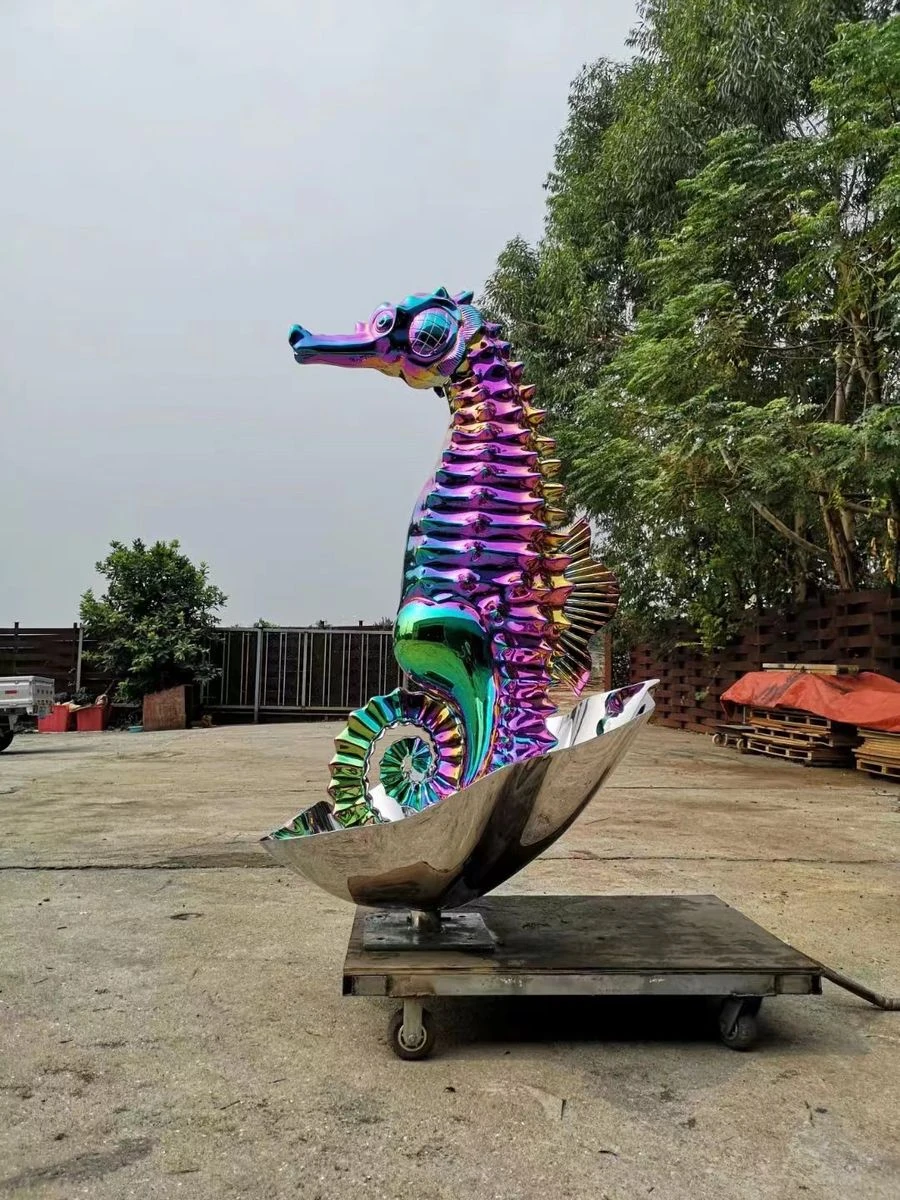
Colour and texture are separate choices. A gold PVD surface can retain a brushed grain, while a coloured PVD finish on a mirror-polished form retains its reflective character. Our brushed gold part and rainbow-coloured seahorse show those different combinations.
For the next step, see our gold-tone stainless steel finish guide for colour references and finish sample approval.
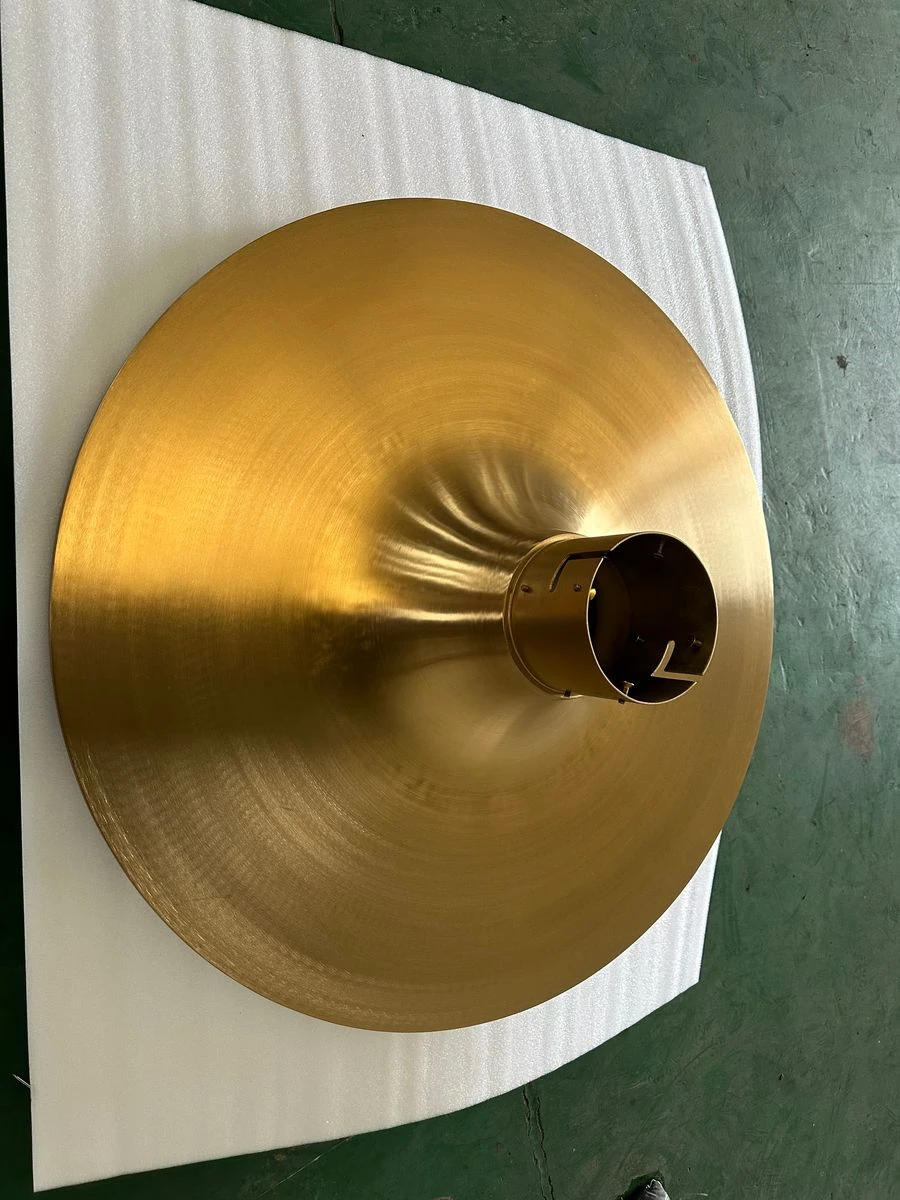
When preparing the brief, describe both parts of the choice: for example, gold with a brushed surface, or colour over mirror polish. If colour is used only on selected areas, identify those areas clearly. We make finish samples to the customer’s requirements so both sides can approve the surface before production.
Material grade and finish are different decisions
Our standard for mirror-polished work is 316L, indoors and outdoors. We can use 304 on request for budget-sensitive projects. The difference in material price is small compared with the forming, welding and polishing labour in our mirror sculptures.
Choosing a brushed or coloured appearance does not answer the material question by itself. Put the requested grade and the requested surface on separate lines in your brief. If you are comparing grades, read our 304 vs 316L guide for sculpture alongside this finish discussion.
Think about keeping the surface clean
The smoother surface of mirror-polished stainless steel is easier to keep clean than a grain that can hold dirt. This can be overlooked when a finish is chosen only for its first visual impression. The textured look of brushing is a design choice, but it also needs to be considered by the team looking after the installed work.
Tell us who will maintain the sculpture and whether easy cleaning is a priority. Discuss the visible texture and the intended location together. For detailed grade and care considerations, use the material guide above; for the finished reflection and its inspection, use the mirror-polish guide.
Approve the surface before production
We make finish samples on request and agree them with the customer before production. Use that stage to settle the surface, colour and the boundary between combined finishes. A short description starts the conversation; an approved sample gives both sides a shared reference for the intended result.
Keep a finish sample separate from a scale sample in your brief. A scale sample, or maquette, is made on request and normally charged. If you need both the form and surface reviewed through samples, state both requirements so we can discuss them together.
FAQ
Is brushed stainless steel easier to keep clean than mirror?
Not necessarily. Dirt can collect in brushed grain. A smooth mirror surface is easier to keep clean, so consider routine care alongside the appearance you prefer.
Can one sculpture combine mirror and sandblasted finishes?
Yes. We can combine finishes on different areas, such as a mirror-polished body and sandblasted base. Mark the areas in your brief and agree the surface samples before production.
Can a gold or coloured sculpture still have a mirror finish?
Yes. PVD colour can be applied over a mirror-polished surface. Gold, rose gold and colours are available; specify the underlying texture as well as the colour when discussing the commission.
Discuss the finish for your sculpture
Explore our mirror stainless steel sculpture fabrication, then send us your design and finish brief. Include the dimensions, indoor or outdoor location, preferred surface and any combined or coloured areas.
Related guides
Modern Art Sculpture is a brand of Xiamen Meibile Import And Export Co., Ltd. We fabricate in our own workshops for stainless steel, fiberglass and resin.